 by
by Mobile App Development
As part of the interaction design graduate class, I completed a design process resulting in a functioning mobile app prototype.
Lunch Money Buddy is a mobile app in development that allows parents and guardians of school-age children to manage various aspects of their kids’ in-school cafeteria lunch accounts. These aspects may include adding funds to the student’s lunch account or viewing upcoming menus to make lunch decisions.
Problem:
Parents and guardians need a better way to manage lunch plans for their child(ren). Many are busy, working caregivers. Paper menus get lost, lunch money falls from pockets, and sometimes lunch is just forgotten. By creating an app that allows for viewing menus and managing funds, caregivers can see information in real time and even add funds immediately.
Actions:
The design process deliverables included four user journeys, a sitemap, wireframes, and a working prototype.
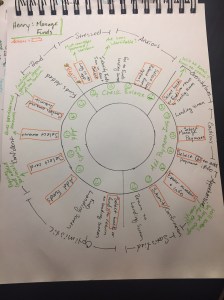
The process started with an evaluation of application specifications and personas. With this information, two user journeys were created for each persona to represent two specific tasks. A sitemap was then created to show the app’s structure and key user needs.
Rough sketching of screens to create wireframes was the next step in the design process. These sketches were refined and rebuilt in OmniGraffle. A selection of the wireframes were highlighted to show key design elements, user needs, and functionality.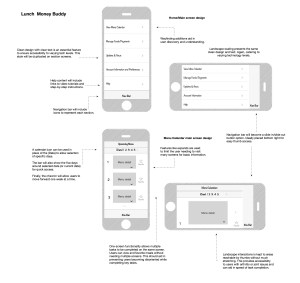
Using Proto.io, the wireframes were translated to a working hi-fi prototype with all functionality such as managing menus, adding funds, and managing account preferences. Included with the prototype is a document detailing the design decisions and considerations.
Finally, specifications for usability testing were created. The test would test three key functions of new users.
Results:
While the prototype testing hasn’t been completed, it provides a template for the front-end design. Each deliverable gives valuable information to guide the final production in a user-centric way.
Lessons Learned
I am first-and-foremost a content strategist. The lessons learned in this interaction design challenge are vast. Not only have I gained knowledge and skills in choosing appropriate design patterns, but I have a much deeper understanding of elements such as microinteractions, wayfinding, and affordances.
 Amy Grace wells